
SPIRULINA PROGRAM
What is Spirulina?
Spirulina is a single-celled blue-green alga that flourishes in warm, alkaline freshwater environments. Renowned for its nutritional value, Spirulina contains 65-71% complete protein, with all essential amino acids perfectly balanced. It thrives in conditions that are inhospitable to most other algae, such as the East African Rift Valley lakes, where it sustains flamingos. Spirulina's ability to convert sunlight into micronutrient-rich energy is a key feature, and its distinctive spiral shape is reflected in its name.
International Endorsements
- United Nations World Food Conference (1974): Declared Spirulina as “the best food for the future.”
- United Nations General Assembly: Urged member states, UN agencies, intergovernmental organizations, NGOs, and the private sector to promote Spirulina production and use.
- Food and Agriculture Organization (FAO): Highlighted the need for governments and international organizations to reassess Spirulina’s potential for food security and emergency response, and to enhance production techniques in challenging environments.
- World Health Organization (WHO): Recognized Spirulina as a highly suitable food, noting its rich iron and protein content and its safety for children.
Nutritional Benefits and Properties
Spirulina is often termed a "superfood" due to its exceptional nutrient profile. It boasts the highest concentration of nutrients found in any food, plant, grain, or herb. Key attributes include:
- Protein: Composed of 60% highly digestible vegetable protein.
- Vitamins and Minerals: High levels of beta-carotene (10 times more than carrots), vitamin B-12, iron, and trace minerals.
- Essential Fatty Acids: Includes Gamma-Linolenic Acid (GLA), which is rare in non-breastfed individuals.
- Amino Acids: Offers a balanced spectrum of essential amino acids.
- Additional Components: Contains cleansing chlorophyll and the blue pigment Phycocyanin.
Spirulina’s remarkable nutrient density and health benefits make it a valuable addition to any diet, supporting overall health and well-being.
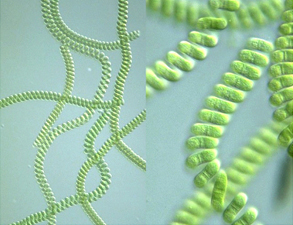
Spirulina as seen under a microscope
The World Health Organization (WHO) declared that “Spirulina represents an interesting food for multiple reasons, rich in iron and protein, and is able to be administered to children without any risk. We at WHO consider it a very suitable food”.
Spiralina has been declared by the world as the future food because of its rich content in protein and iron and a number of researches have been conducted to ascertain its safety in human consumption. It has amazing properties and in many ways can be considered a Super Food. It contains the most remarkable concentration of nutrients known in any food, plant, grain or herb. It’s composed of 60% highly digestible vegetable protein, has extremely high concentrations of beta carotene, vitamin B-12, iron and trace minerals, and the rare essential fatty acid GLA – Gamma-Linolenic Acid (which people who have not been breastfed do not have). It has a balanced spectrum of amino acids, cleansing chlorophyll, and the blue pigment, Phycocyanin.

Spirulina in water

Spirulina in tablet and powder form
What Does Spirulina Do?
Spirulina is packed with the proteins, vitamins and minerals that your body needs in order to be healthy. As a food, Spirulina promotes healing and healthy living by boosting the natural defenses of your body, making you stronger and better equipped to fight diseases. Spirulina helps detox the body giving the body the power to rejuvenate itself. Spirulina is not a synthetic drug. It is 100% natural food and can be used by anyone at anytime to help fight disease or for general health and fitness.
Spiriluna is consumed in powder form, tablets or capsules for easy usage as food supplement and immune booster due to its high protein and nutrients content. The powder is added to warm food or drinks in small quantities; two table spoon per day.
| How Can You Take Spirulina The dosage of Spirulina depends on the individual need of the user A general guideline: |
|
| Children up to 5 | 1 – 2 grams/day |
| Children over 5 | 2 – 3 g/day |
| Adults | 3 – 5 g/day |
| Immune builder | 10 – 15 g/day |
| Primary Protein | 15 – 20 g/day |
| Athletes | 20 – 30 g/day |
| (1 teaspoon = 1.5 grams) | |
10 benefits from taking 5-10 grams of spirulina every day;
• Increases the CD4 count – Strengthens the immune system particularly useful for
• HIV/ AIDS patients.
• Increases RNA (Ribonucleic acid) in the brain for more energy
• The beta carotene (contains 10 times more that of carrots) is an excellent source of disease fighting antioxidants, and is also good for healthy eyes and vision.
• Contains vegetable protein and amino acids to build muscle
• High concentration of B Vitamins; which not only break down carbohydrate and lipids but also maintain cardiovascular health.
• It is also an excellent anti-inflammatory, which is an essential benefit to arthritis patients and prevents heart disease.
• Contains anti-aging properties.
• Improves digestive health
• Contains easy to absorb iron supplements ideal for women and children.
• Reduces cancer with antioxidant protection.
Why is alignAfrica engaging in spirulina production?
alignAfrica aims to form a “chain of nutrition”: every community or individual that gains this knowledge will make use of it, spread it to its local community, and then pass it to other communities and individuals in need.
As outlined above, spirulina is of significant importance to malnourished people. The health benefits of spirulina have made it an excellent food for rapid recovery of children from malnutrition related diseases.
Malnutrition has remained to be a consistent challenge facing Ethiopia as a developing country in its efforts to development. Malnutrition is a major public health problem in Ethiopia and has a significant impact on communities, in particular for women and children. Millions of children die of severe acute malnutrition each year and poor nutrition prevents many children and adults from ever reaching their full mental and physical capacity. For example, children who are malnourished are at risk of stunting, which affects their productivity when they are older; malnutrition also affects their learning ability, school performance and attendance. All of these consequences have a social and economic impact on the community and the country. Ethiopia loses around 16.5 percent of its GDP each year to the long-term effects of child malnutrition. That's just one of the statistics to emerge from "The Cost of Hunger in Africa" study which measures the economic impact of malnutrition in 12 different countries. Ethiopia is the third country so far to publish its findings.
This program is intended to be implemented in the Gambella region where high statistics of malnutrition has been registered. The residents of Gambella are pastoralists and as such, highly depend on agriculture mainly rain-fed. In the past four decades, Ethiopia has been faced by severe droughts brought about by unfavorable weather related factors including climate change and environmental degradation rendering the region unproductive agriculturally. These factors have impacted both social and economic lives of the people in the region. Gambella residents have been hard hit by these droughts due to their dependence on rain-fed agriculture exposing them to food insecurity. The results have been devastating with children, women and the old people being malnourished to the point of death. It is against these backdrops that alignAfrica has embarked on a mission of reversing the fierce effects of food insecurity in Gambella region with a Super Food known as spirulina.
alignAfrica with technical involvement of three Biotechnology Researchers and financial support from our donor organizations will pilot a project of mass production of spirulina in two zones of the Gambella region; Nuer and Anuak zones. This is a sustainable program since the produced spirulina will not only be consumed by the target groups to improve their nutrition but the surplus Spirulina will be sold to generate income. Mass production of spirulina is also environmentally friendly thereby improving food security in the region. The pure culture of spirulina will be obtained from Lake Chitu located in the Great Rift Valley of Ethiopia.
The specific objectives of this project are to:
• develop strategy for mass production of Spirulina, • Isolate pure culture and characterize the Spirulina using local resources, • conduct laboratory scale production, • construct and develop outdoor production ponds or tankers system, • carry out outdoor pilot scale production, • create awareness of the consumption of this healthy food, • give training to target groups, national nutrition taskforce members and • Create economically self-sufficient mass production system.
The Advantages of Spirulina production
• Can be produced locally and so has social as well as economic benefits
• Cheap to produce
• Uses simple technology and locally available materials
• Requires much less water to grow than vegetables
• Stimulates the education of local women about nutrition
• Can be combined with other products (eg rice, etc.) to be made into locally acceptable food products all around the world
• Very effective, contains most essential micronutrients in high concentrations so 1 gram per day can combat malnutrition within a month.
• Very easy to digest
• Very safe, it is resistant to most contamination due to highly alkaline environment
Research studies have been conducted in Ethiopia in regard to malnutrition. One of such programs is;
Cost of Hunger in AfricaThe Cost of Hunger in Africa analyzes the impact of hunger across 12 countries in Africa. It was carried out with the support of the African Union Commission, a body which includes the New Partnership for Africa’s Development, the UN Economic Commission for Africa and WFP.
However, the lasting effects of malnutrition still weigh heavily on the Ethiopian economy, as new research shows. The “Cost of Hunger in Africa” report estimates that under nutrition costs the country billions of dollars every year in lost worker productivity. Here are 10 of its key findings.
1. Today, more than 2 out of every 5 children in Ethiopia suffer from stunting, which means they're short for their age. Stunting is a lifelong condition that results when children miss out on critical nutrients while in the womb or during the first five years of their lives.
2. As many as 81% of all cases of child under nutrition and its related pathologies go untreated.
3. 44% of the health costs associated with under nutrition occur before the child turns 1 year-old.
4. 28% of all child mortality in Ethiopia is associated with under nutrition.
5. 16% of all repetitions in primary school are associated with stunting
6. Stunted children achieve 1.1 years less in school education.
7. Child mortality associated with under nutrition has reduced Ethiopia’s workforce by 8%
8. 67% of the adult population in Ethiopia suffered from stunting as children.
9. The annual costs associated with child under nutrition are estimated at Ethiopian birr (ETB) 55.5 billion, which is equivalent to 16.5% of GDP.
10. Eliminating stunting in Ethiopia is a necessary step for its growth and transformation.